10% Off
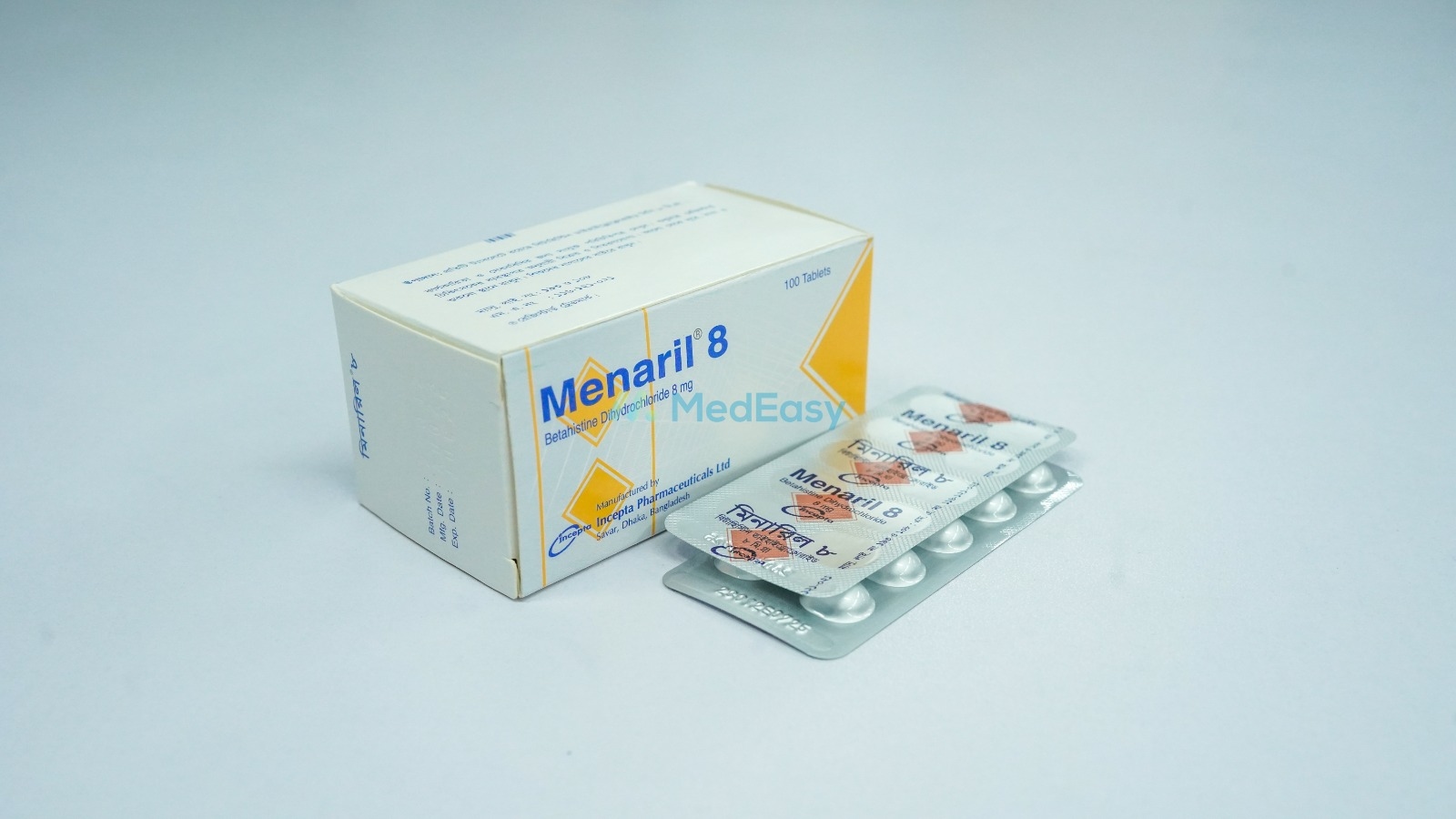
Menaril8 mg
Incepta Pharmaceuticals Ltd.
৳27.00
Add to cart
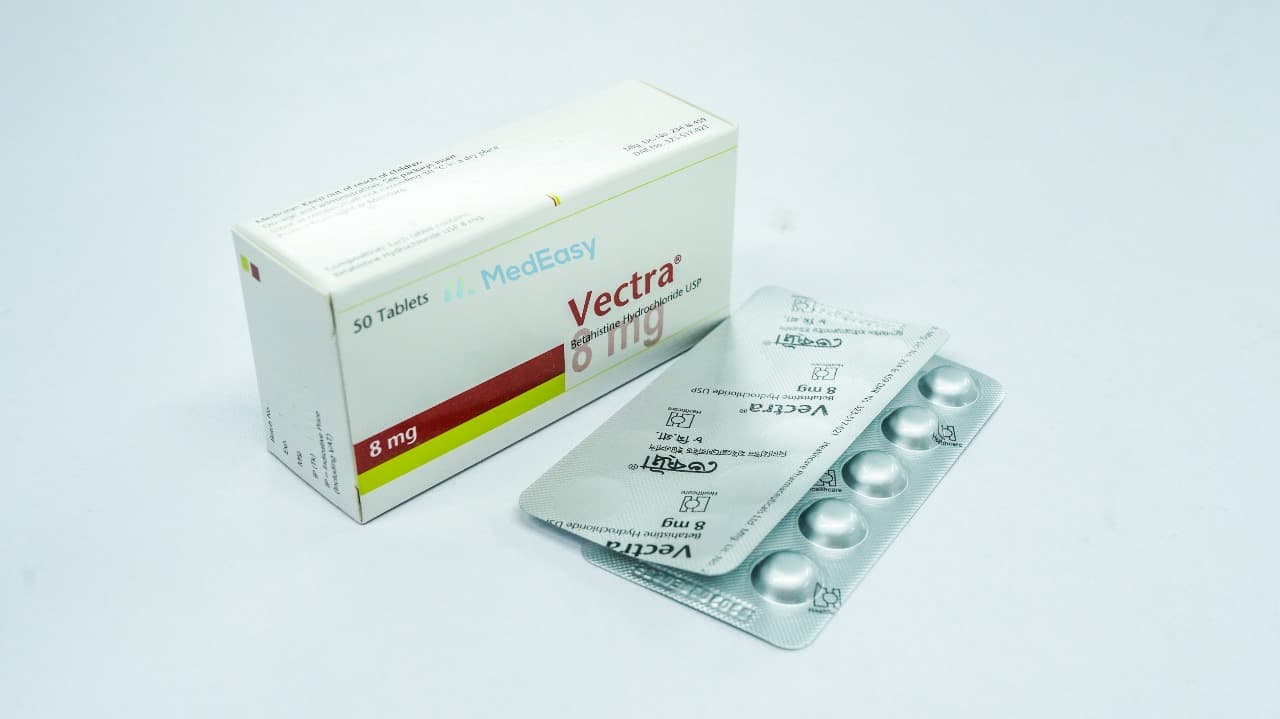

Vectra is indicated for the symptomatic treatment of the following conditions:
Vectra is intended for long-term, regular use to reduce the frequency and intensity of vertigo episodes over time. It is not effective for treating an acute vertigo attack that is already in progress, and patients should be counselled accordingly to set realistic expectations.
Each tablet contains Betahistine Dihydrochloride as the active pharmaceutical ingredient, commonly available in strengths of 8 mg, 16 mg, and 24 mg (formulation and strength vary by manufacturer/brand). Tablets also contain standard pharmaceutical excipients such as microcrystalline cellulose, citric acid, colloidal silicon dioxide, and magnesium stearate, which may vary between manufacturers.
Vectra is a synthetic histamine analogue used primarily in the management of vertigo and other symptoms associated with Meniere's disease. Chemically, it acts on the histaminergic system in the inner ear and central nervous system, and has been used clinically for several decades in many countries around the world for vestibular disorders.
Vectra is available as oral tablets and is typically taken with food to reduce the likelihood of gastrointestinal upset.
Vectra belongs to the therapeutic class of anti-vertigo agents, and is pharmacologically classified as a histamine analogue used in the treatment of vestibular disorders.
Betahistine Dihydrochloride is a structural analogue of histamine with a dual, complementary action on histamine receptors:
The combined effect is believed to improve microcirculation in the inner ear, reduce endolymphatic pressure, and facilitate vestibular compensation at the level of the central nervous system, which together reduce the frequency and severity of vertigo attacks over time.
| Indication | Recommended Dose |
|---|---|
| Meniere's disease / vestibular vertigo | Usual starting dose: 8-16 mg three times daily, taken with food. Maintenance dose typically ranges from 24-48 mg per day in divided doses, adjusted according to individual response. Some patients may benefit from a higher initial dose which can be reduced during maintenance therapy. |
Use of Vectra in children and adolescents under 18 years is not recommended, as safety and efficacy have not been established in this age group. See Use in Special Populations.
No specific dose adjustment has been established for patients with renal or hepatic impairment based on available clinical experience; however, such patients should be monitored and use should be guided by a physician.
Vectra tablets should be taken with food to minimize the risk of gastrointestinal discomfort. Treatment response should be reviewed periodically by the prescribing physician, and the benefit of continued treatment should be reassessed if no improvement is observed within a few months.
Vectra is administered orally as tablets, preferably taken with meals to reduce the chance of stomach upset. Tablets should be swallowed with water and not crushed or chewed unless directed otherwise by a physician or pharmacist.
The following clinically relevant interactions have been reported with Vectra:
Patients should inform their physician of all medicines, supplements, and herbal products they are taking before starting Vectra.
Betahistine Dihydrochloride is contraindicated in the following conditions:
Vectra is generally well tolerated. Reported side effects include:
Most gastrointestinal side effects can be reduced by taking Vectra with food. Patients should seek medical attention if they experience signs of a severe allergic reaction (e.g., swelling of the face/throat, difficulty breathing).
Pregnancy: There is limited clinical data on the use of Vectra in pregnant women, and animal reproduction studies are insufficient to rule out risk. As a precaution, Vectra should be used during pregnancy only if clearly needed and if the potential benefit to the mother justifies the potential risk to the fetus. A physician should be consulted before use.
Lactation: It is not known whether Vectra or its metabolites are excreted in human breast milk. A decision should be made, in consultation with a physician, whether to discontinue breastfeeding or discontinue the medicine, taking into account the benefit of breastfeeding for the infant and the benefit of treatment for the mother.
The following precautions apply to the use of Vectra:
Reported symptoms of Vectra overdose (particularly with intentional overdose) include nausea, vomiting, drowsiness, abdominal discomfort, and, at higher doses, more serious effects such as convulsions and cardiac or pulmonary complications have been reported, especially when taken with other drugs in intentional overdose.
There is no specific antidote for Vectra overdose. If an overdose is suspected, seek immediate medical attention or contact emergency services/a poison control center right away. Treatment is supportive and symptomatic, and should be managed under medical supervision.
Store at room temperature (below 30°C), away from light and moisture. Keep out of reach of children.
The safety and efficacy of Vectra in children and adolescents under 18 years of age have not been established. Its use in this age group is therefore not recommended.
No dose adjustment is generally required in elderly patients based on available clinical experience; however, Vectra should be used with the usual caution applied to this population, considering any concomitant conditions or medications.
No specific dose adjustment has been established for patients with renal or hepatic impairment; use should be guided by a physician with appropriate monitoring.
The duration of treatment with Vectra is individualized based on clinical response and is typically continued long-term for chronic management of Meniere's disease symptoms. The prescribing physician should periodically review the ongoing need for treatment, generally reassessing benefit after a few months, and discontinuing therapy if no meaningful improvement in vertigo frequency/severity is observed.
Anti-vertigo agents; Histamine analogues
Betahistine Dihydrochloride acts as a weak histamine H1-receptor agonist and a potent histamine H3-receptor antagonist. This dual action increases blood flow in the inner ear's microcirculation and increases histamine turnover in the brain, which together are believed to reduce endolymphatic pressure in the inner ear and enhance central vestibular compensation, thereby reducing the frequency and severity of vertigo episodes.
Vectra is not recommended for use in children and adolescents under 18 years of age, as safety and efficacy in this population have not been established through adequate clinical studies.
Q: What is Vectra 8 mg Tablet used for?
A: Vectra 8 mg Tablet is used to reduce the frequency and severity of vertigo (dizziness) attacks and to relieve tinnitus (ringing in the ears) and hearing loss/fullness associated with Meniere's disease. It is also used for symptomatic relief of vertigo caused by inner-ear balance disorders.
Q: Will Vectra 8 mg Tablet stop my vertigo attack immediately?
A: No. Vectra 8 mg Tablet is meant to be taken regularly over time to reduce how often and how severely vertigo attacks occur; it is not effective for treating a vertigo attack that is already happening.
Q: How should I take Vectra 8 mg Tablet?
A: Vectra 8 mg Tablet is usually taken as 8-16 mg three times daily with food, though your physician may adjust this based on your response, up to a typical maintenance dose of 24-48 mg per day. Always follow your doctor's specific instructions.
Q: Can I take Vectra 8 mg Tablet if I have a history of stomach ulcers?
A: Vectra 8 mg Tablet should be used with caution in patients with current or past peptic ulcer disease, as it may theoretically aggravate stomach acid-related symptoms. Inform your physician of any history of ulcers so they can monitor you appropriately.
Q: Is Vectra 8 mg Tablet safe during pregnancy or breastfeeding?
A: Data on the use of Vectra 8 mg Tablet during pregnancy is limited, so it should only be used if clearly needed and if the benefit outweighs potential risk to the baby, under a physician's guidance. It is also not known whether it passes into breast milk, so breastfeeding mothers should consult their physician before use.
Q: What are the common side effects of Vectra 8 mg Tablet?
A: The most common side effects of Vectra 8 mg Tablet are mild nausea, indigestion (dyspepsia), and headache. These can often be reduced by taking the medicine with food. Rare side effects include allergic skin reactions; seek medical help if you notice swelling of the face or throat or difficulty breathing.
Disclaimer
The information provided is accurate to the best of our knowledge, but it does not replace professional medical advice. We cannot guarantee its completeness or accuracy, and the absence of specific information about a drug should not be taken as an endorsement. We are not responsible for any consequences arising from this information, so please consult a healthcare professional for any concerns or questions.