
8% Off
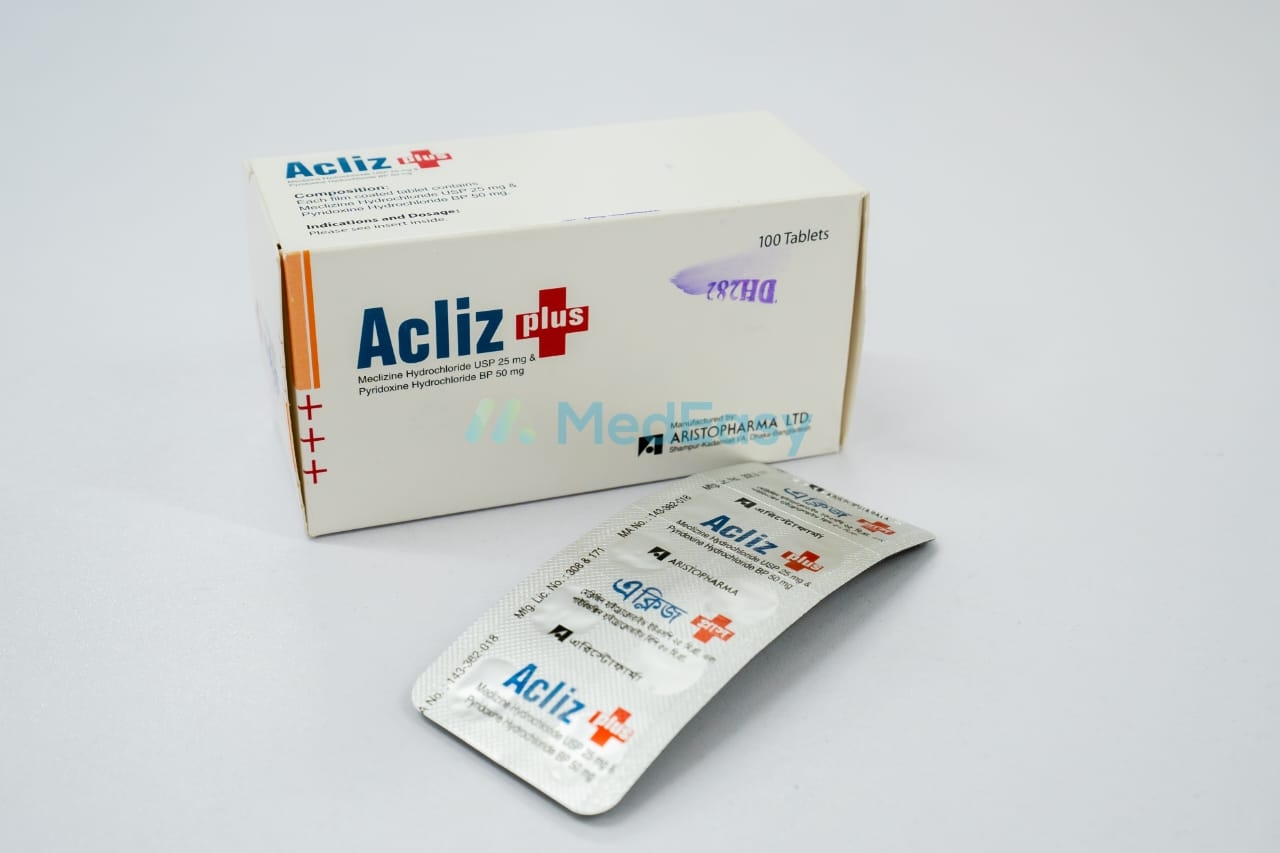
Acliz Plus25 mg+50 m
Aristopharma Ltd.
৳32.20
Add to cart
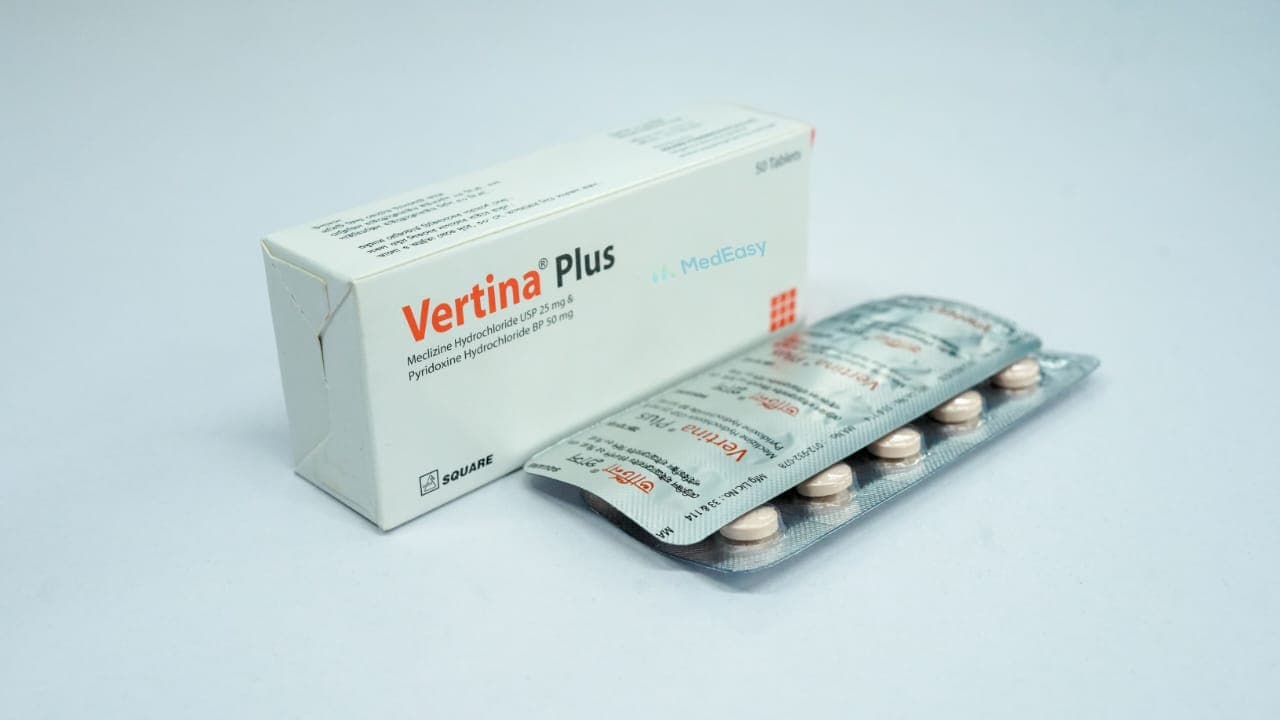
Vertina Plus 25 mg+50 mg Tablet is available on MedEasy for ৳27.69 per 10's Strip, with home delivery anywhere in Bangladesh. It is manufactured by Square Pharmaceuticals PLC. Its generic name is Meclizine + Pyridoxine.

Vertina Plus is a combination of meclizine, an antihistamine/antiemetic, and pyridoxine (vitamin B6). It is used for the following indications:
Use of Vertina Plus should always be guided by a physician, particularly during pregnancy or when other medical conditions are present.
Each dose of Meclizine + Pyridoxine typically contains:
Strengths and dosage forms (tablet, chewable tablet, or oral liquid) vary by manufacturer; always check the product label for the exact composition of the specific brand dispensed.
Vertina Plus combines meclizine, a piperazine-derivative antihistamine with central anticholinergic and antiemetic activity, with pyridoxine (vitamin B6), a water-soluble vitamin with its own antiemetic effect, particularly in nausea of pregnancy. The combination is formulated to control nausea, vomiting, dizziness, and vertigo from more than one underlying mechanism.
It is typically available as oral tablets, chewable tablets, or an oral liquid/syrup, and is taken by mouth.
Vertina Plus belongs to the antihistamine / antiemetic therapeutic class (meclizine component), combined with a vitamin B6 supplement (pyridoxine component) that also has antiemetic activity.
Meclizine is a first-generation, piperazine-derivative H1-antihistamine. It is thought to reduce nausea, vomiting, and vertigo largely through central anticholinergic action on the vestibular apparatus and vomiting center in the brainstem, along with H1-receptor blockade, which reduces vestibular excitability and the associated nausea/vomiting reflex.
Pyridoxine (vitamin B6) is a co-factor in numerous enzymatic reactions, including neurotransmitter synthesis (e.g. serotonin, GABA). Its antiemetic mechanism in nausea of pregnancy is not fully elucidated, but it is thought to modulate neurotransmitter pathways involved in the vomiting reflex.
Together in Meclizine + Pyridoxine, the two components act on complementary pathways to reduce nausea, vomiting, and dizziness/vertigo.
| Population | Dose |
|---|---|
| Adults and children ≥12 years | One dose (per product labeling, commonly equivalent to meclizine 25–50 mg) taken 1 hour before travel; may be repeated every 24 hours as needed for the duration of travel. |
| Children <12 years | Not recommended unless specifically directed by a physician; safety and efficacy not established (see Pediatric Use). |
| Population | Dose |
|---|---|
| Adults | Total daily dose commonly equivalent to meclizine 25–100 mg per day, in divided doses, adjusted according to response, as directed by a physician. |
| Population | Dose |
|---|---|
| Pregnant women (physician-directed) | Low-dose regimens (e.g. meclizine 25 mg at bedtime with pyridoxine 10–25 mg, several times daily as directed) have been used; exact dosing must be individualized by the treating physician and should not be self-initiated. |
Vertina Plus is administered orally. Tablets/chewable tablets may be taken with or without food; chewable forms should be chewed before swallowing. For motion sickness, take the dose about 1 hour before the activity likely to cause symptoms (e.g. travel). Do not crush or alter extended-release forms, if prescribed, unless directed by a physician.
Vertina Plus has the following clinically significant interactions, mainly related to its meclizine component:
Inform your physician or pharmacist about all other medicines, supplements, and herbal products you are taking before starting Vertina Plus.
Meclizine + Pyridoxine is contraindicated in:
Other conditions such as glaucoma, urinary retention/prostatic hypertrophy, or asthma are precautions requiring caution rather than absolute contraindications; see Precautions and Warnings.
Side effects of Vertina Plus are primarily related to the meclizine component:
Pyridoxine at the doses used in this combination is generally well tolerated; sensory neuropathy is a rare risk only associated with very high-dose, long-term pyridoxine use (see Precautions and Warnings).
Pregnancy: The pyridoxine component of Vertina Plus is an established, guideline-supported first-line option for nausea of pregnancy, and the combination with meclizine is commonly used under physician direction for this indication. Nonetheless, as with all medicines in pregnancy, Vertina Plus should be used only if clearly needed and if the potential benefit justifies the potential risk to the fetus; use only under the direction and supervision of a physician, especially in the first trimester.
Lactation: Meclizine and pyridoxine pass into breast milk in small amounts. Sedating antihistamines such as meclizine may cause drowsiness in a breastfeeding infant and may also reduce milk supply. Use during breastfeeding only if a physician determines the benefit outweighs the risk, and monitor the infant for excess sedation or poor feeding.
Use Vertina Plus with caution in the following situations:
Overdose of Vertina Plus may cause marked drowsiness, confusion, hallucinations, dry mouth, blurred vision, fixed/dilated pupils, flushing, urinary retention, and in severe cases, seizures or cardiorespiratory depression, particularly in young children. If overdose is suspected, seek immediate medical attention or contact a poison control center/emergency services right away. Do not attempt to treat an overdose at home without professional medical guidance.
Store at room temperature (below 30°C), away from light and moisture. Keep out of reach of children.
Vertina Plus is generally not recommended in children younger than 12 years for motion sickness, and safety and efficacy have not been established in this age group for the other indications; use only if specifically directed by a pediatrician, as children may be more susceptible to anticholinergic side effects and paradoxical excitation.
Elderly patients may be more sensitive to the sedative and anticholinergic effects of the meclizine component (drowsiness, confusion, dry mouth, urinary retention); use the lowest effective dose and monitor closely.
No well-established dose adjustment is defined; use with caution and physician guidance, as meclizine is metabolized primarily by the liver.
Duration of treatment with Vertina Plus depends on the indication: for motion sickness, it is typically used short-term, only for the duration of travel or exposure to the triggering activity; for vertigo or nausea of pregnancy, it may be used for a longer period as directed by a physician, with periodic reassessment of the need for continued treatment.
Antihistamine / Antiemetic (meclizine) combined with a Vitamin B6 supplement / antiemetic adjunct (pyridoxine)
The meclizine component of Meclizine + Pyridoxine acts as a central anticholinergic and H1-receptor antagonist, reducing vestibular stimulation and the resulting nausea, vomiting, and vertigo. The pyridoxine (vitamin B6) component contributes additional antiemetic activity through effects on neurotransmitter metabolism, complementing the action of meclizine, particularly in nausea of pregnancy.
Vertina Plus is not recommended for children under 12 years of age for motion sickness, and its safety and efficacy for other indications in children have not been established. In older children (12 years and above) it may be used for motion sickness at adult dosing, under caregiver/physician guidance, with attention to increased sensitivity to sedation and anticholinergic effects compared with adults.
Q: What is Vertina Plus 25 mg+50 mg Tablet used for?
A: Vertina Plus 25 mg+50 mg Tablet is mainly used to prevent and treat nausea, vomiting, and dizziness caused by motion sickness, to manage vertigo from inner ear problems, and, under a physician's guidance, to help control nausea and vomiting of pregnancy.
Q: Is Vertina Plus 25 mg+50 mg Tablet safe during pregnancy?
A: The pyridoxine component of Vertina Plus 25 mg+50 mg Tablet is a recommended first-line option for pregnancy-related nausea, and the combination is commonly used for this purpose under medical supervision. However, like all medicines in pregnancy, Vertina Plus 25 mg+50 mg Tablet should be used only if the potential benefit outweighs the potential risk, and only as directed by your physician, especially during the first trimester.
Q: Can Vertina Plus 25 mg+50 mg Tablet make me drowsy?
A: Yes. Drowsiness is the most common side effect of Vertina Plus 25 mg+50 mg Tablet, due to its meclizine component. Avoid driving, operating heavy machinery, or performing tasks that need full alertness until you know how Vertina Plus 25 mg+50 mg Tablet affects you, and avoid alcohol or other sedating medicines while taking it.
Q: Who should not take Vertina Plus 25 mg+50 mg Tablet?
A: Vertina Plus 25 mg+50 mg Tablet should not be taken by anyone with a known allergy (hypersensitivity) to meclizine, pyridoxine, or any ingredient of the product. People with glaucoma, urinary retention, prostate enlargement, or asthma should use it only with caution and medical advice, as it is not strictly contraindicated in these conditions but requires careful supervision.
Q: What should I do if I miss a dose or take too much?
A: If you miss a dose of Vertina Plus 25 mg+50 mg Tablet and it is being taken on a regular schedule, take it as soon as you remember unless it is close to the next dose — do not double up. If you or someone else has taken more than the recommended amount of Vertina Plus 25 mg+50 mg Tablet, seek immediate medical attention or contact a poison control center/emergency services right away, especially in children.
Q: Can I take Vertina Plus 25 mg+50 mg Tablet with other medicines?
A: Tell your doctor or pharmacist about all medicines and supplements you take before starting Vertina Plus 25 mg+50 mg Tablet. It can increase drowsiness when combined with alcohol, sedatives, opioids, or other CNS-depressant drugs, and may add to the effects of other anticholinergic medicines. Do not take extra vitamin B6 supplements alongside Vertina Plus 25 mg+50 mg Tablet without medical advice.
Disclaimer
The information provided is accurate to the best of our knowledge, but it does not replace professional medical advice. We cannot guarantee its completeness or accuracy, and the absence of specific information about a drug should not be taken as an endorsement. We are not responsible for any consequences arising from this information, so please consult a healthcare professional for any concerns or questions.
