Generic medicine

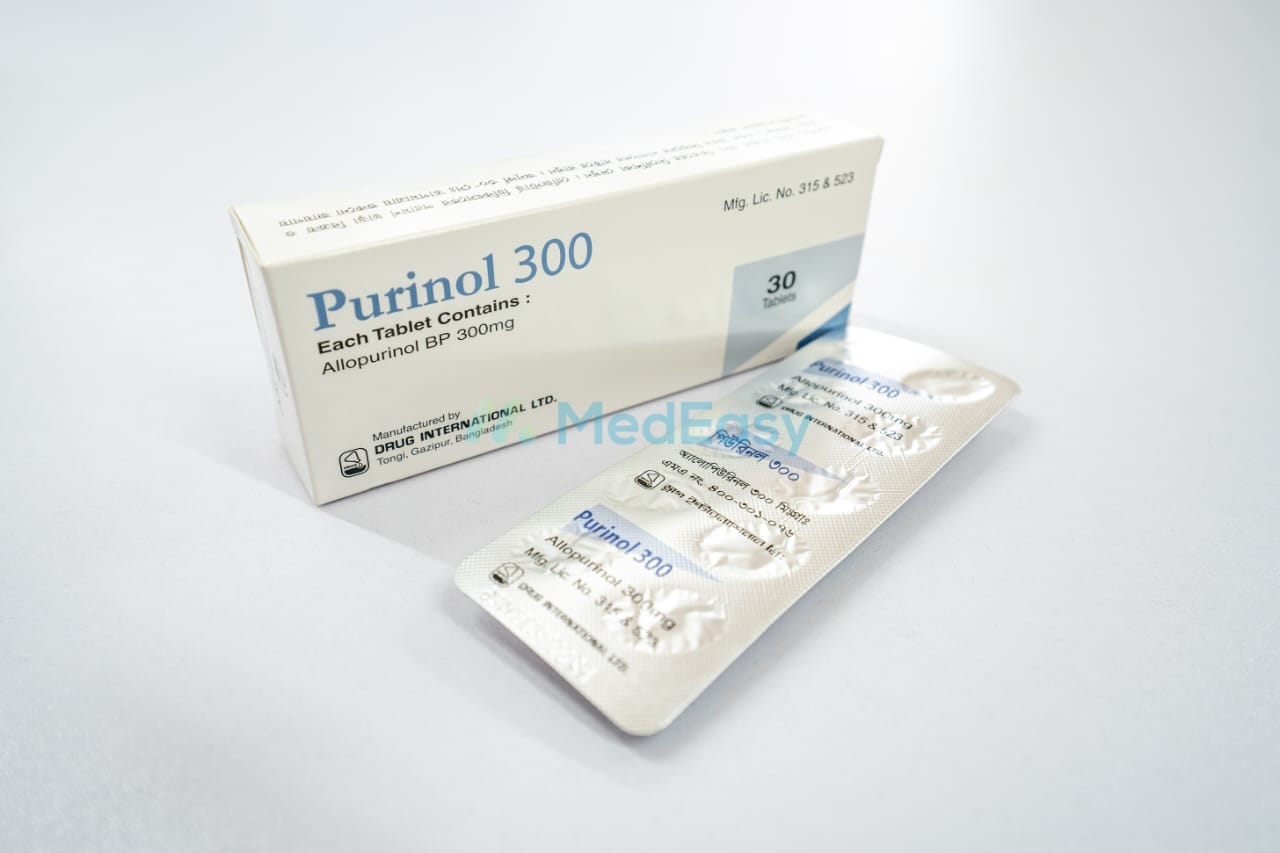
Allopurinol: Brands, Price & Uses in Bangladesh

Established / FDA-Approved Uses Chronic gout and gouty arthritis: Long-term management of hyperuricemia in patients with moderate-to-severe recurrent gout, tophaceous gout and more.

Forms:Tablet

About Allopurinol

Indications of Allopurinol

Established / FDA-Approved Uses

  • Chronic gout and gouty arthritis: Long-term management of hyperuricemia in patients with moderate-to-severe recurrent gout, tophaceous gout, or gout with joint destruction, uric acid nephrolithiasis, or nephropathy. Allopurinol is not indicated for treating an acute gout attack and should not be started during one.
  • Secondary hyperuricemia of malignancy (tumor lysis syndrome): Management and prevention of hyperuricemia in patients with leukemia, lymphoma, and other malignancies receiving cancer chemotherapy that causes rapid cell turnover and elevated serum/urinary uric acid.
  • Recurrent calcium oxalate kidney stones: Management of recurrent calcium oxalate calculi in patients with hyperuricosuria, when fluid intake and dietary measures alone have failed.

Not Indicated For

  • Asymptomatic hyperuricemia (uric acid elevation alone without gout, stones, or malignancy-related risk) is generally not treated with Allopurinol unless a specific indication above applies.
  • Treatment of an acute gout flare - other agents (NSAIDs, colchicine, corticosteroids) are used for the acute attack itself.

Dosage & Administration of Allopurinol

Dosing by Indication

IndicationTypical Adult Dosing
Chronic gout / hyperuricemia of goutInitiate at 100 mg once daily; increase in increments of 100 mg at weekly intervals as needed to reach target serum uric acid, typically to a maintenance dose of 200-300 mg/day for mild disease or 400-600 mg/day for moderate-to-severe tophaceous gout. Maximum recommended dose is 800 mg/day. Doses above 300 mg/day are usually given in divided doses.
Secondary hyperuricemia with chemotherapy (tumor lysis prevention)600-800 mg/day in divided doses, usually started 1-2 days before initiating chemotherapy, together with adequate hydration.
Recurrent calcium oxalate stones with hyperuricosuria200-300 mg/day, often as a single daily dose, alongside adequate fluid intake and dietary measures.

Important Administration Points

  • Do not start Allopurinol during an acute gout attack; wait until the acute attack has completely subsided. If a flare occurs while already taking Allopurinol, treatment is usually continued at the same dose while the flare is treated separately.
  • Gout flares can occur when Allopurinol is first started; physicians often co-prescribe low-dose colchicine or an NSAID for the first 3-6 months as flare prophylaxis.
  • Take after meals with a full glass of water to reduce stomach upset.
  • Maintain a fluid intake of at least 2-3 liters per day, unless otherwise advised, to support urate excretion and reduce stone risk.
  • Renal impairment requires dose reduction (see Use in Special Populations).

Side Effects of Allopurinol

Common

  • Skin rash (see Precautions - any rash warrants prompt medical review and possible discontinuation)
  • Nausea, vomiting, diarrhea, or other mild gastrointestinal upset
  • Increased frequency of gout attacks when first starting therapy
  • Headache, drowsiness

Less Common / Serious

  • Severe hypersensitivity reactions, including Stevens-Johnson syndrome, toxic epidermal necrolysis, and DRESS syndrome (see Precautions and Warnings)
  • Abnormal liver function tests, hepatitis
  • Bone marrow suppression (leukopenia, thrombocytopenia)
  • Renal impairment or worsening of existing renal function

Contraindications of Allopurinol

Allopurinol is contraindicated in patients with known hypersensitivity to Allopurinol or any component of the formulation.

Frequently Asked Questions about Allopurinol

What is Allopurinol used for?

Allopurinol is used for the long-term control of high uric acid levels in chronic gout, to prevent dangerous uric acid spikes during certain cancer chemotherapy, and to help prevent recurrent calcium oxalate kidney stones in people with high urinary uric acid. It is not used to treat an acute gout attack that is already happening.

Can I start Allopurinol during a gout flare?

No. Allopurinol should not be started during an acute gout attack because it can worsen or prolong the flare. Your physician will usually wait until the attack has settled before starting Allopurinol, and may prescribe a low dose of colchicine or an anti-inflammatory medicine for the first few months to help prevent new flares as treatment begins.

What should I do if I get a skin rash while taking Allopurinol?

Stop taking Allopurinol and seek medical attention immediately if you develop a skin rash, blistering, mouth sores, fever, or swollen glands while on treatment. In rare cases, Allopurinol can cause severe, potentially life-threatening skin reactions such as Stevens-Johnson syndrome or DRESS syndrome, and early recognition and discontinuation are important for safety.

Are there important drug interactions with Allopurinol?

Yes. Allopurinol significantly raises blood levels of azathioprine and mercaptopurine, so their doses must be reduced substantially if used together. It can also increase bleeding risk with warfarin, increase the chance of rash with ampicillin or amoxicillin, and interact with thiazide diuretics and ACE inhibitors, raising hypersensitivity risk. Always tell your physician about all medicines you take before starting Allopurinol.

Is Allopurinol safe during pregnancy or breastfeeding?

Information on Allopurinol use in pregnancy is limited, so it should be used in pregnancy only if clearly needed, as judged by your physician, weighing benefits against potential risks to the baby. Allopurinol passes into breast milk, so it should also be used during breastfeeding only under medical supervision.

What happens if I take too much Allopurinol?

If an overdose of Allopurinol is suspected, seek emergency medical attention or contact a poison control center immediately. Do not try to treat an overdose at home; a doctor will provide supportive care, and in some cases dialysis may be used to help remove the drug from the body.

Disclaimer

The information provided is accurate to the best of our knowledge, but it does not replace professional medical advice. We cannot guarantee its completeness or accuracy, and the absence of specific information about a drug should not be taken as an endorsement. We are not responsible for any consequences arising from this information, so please consult a healthcare professional for any concerns or questions.

DoctorBlogArticles