10% Off
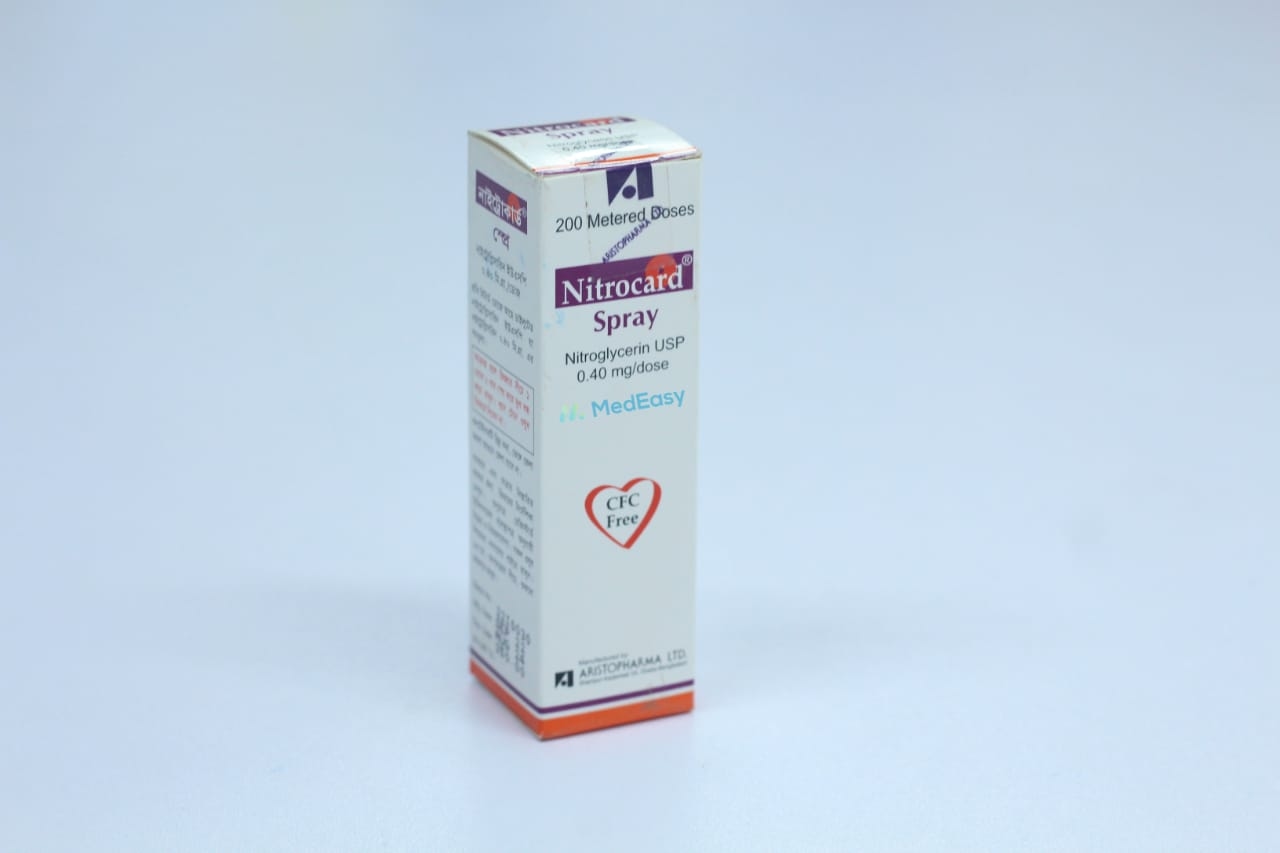
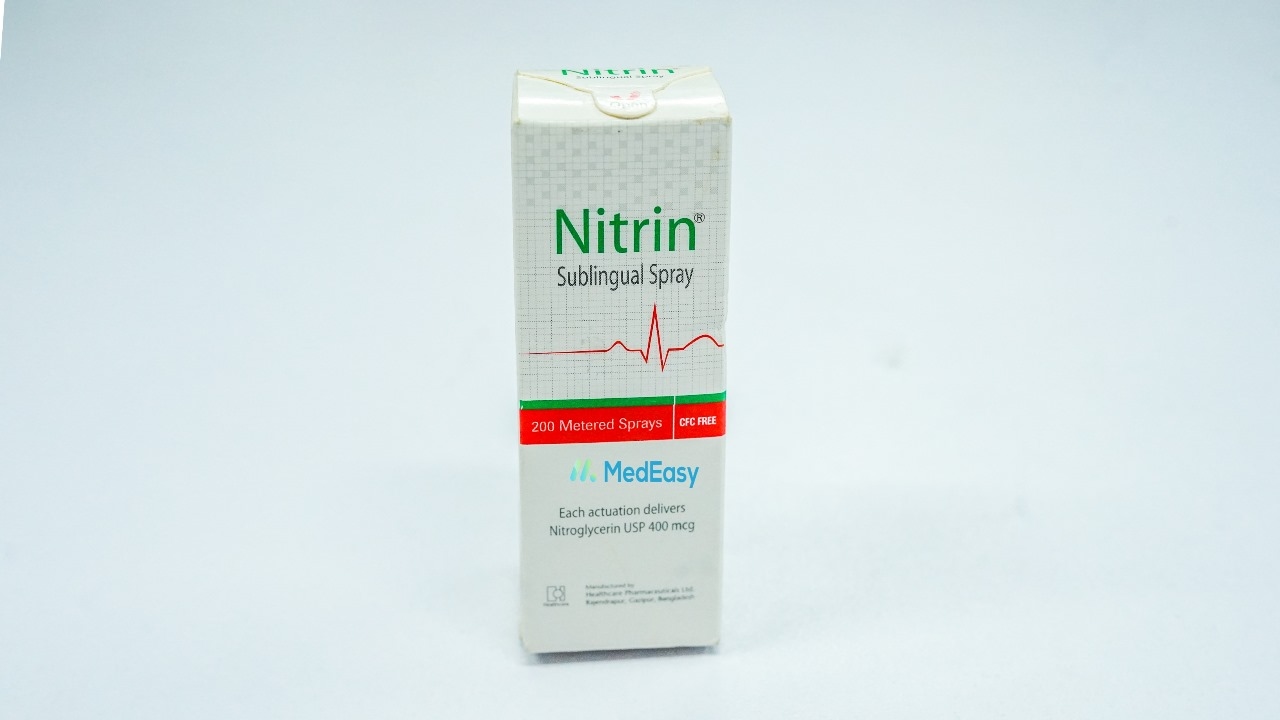
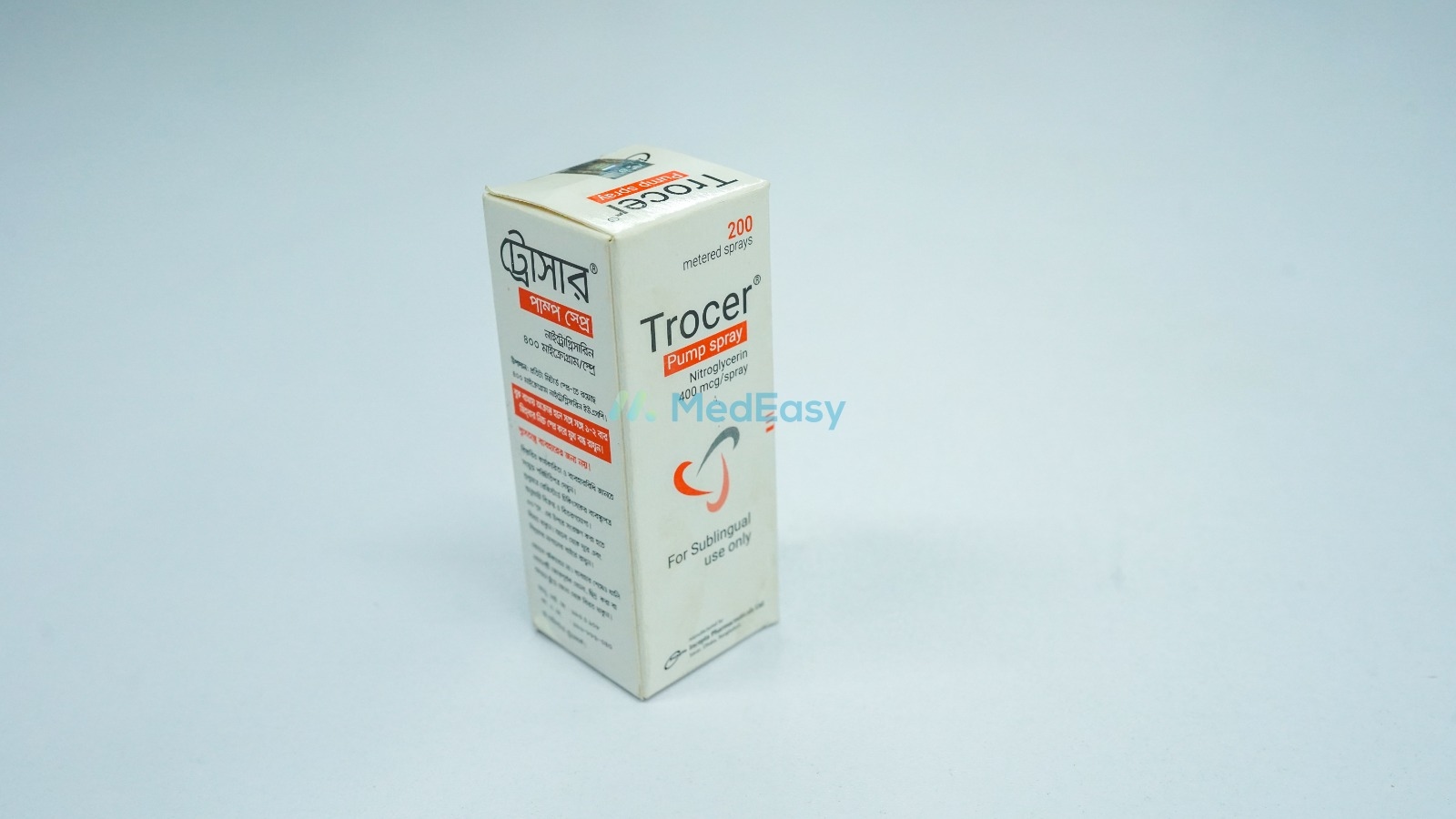
Trocer400 mcg/sp
Incepta Pharmaceuticals Ltd.
৳243.00
Add to cart
Nitroglycerin is an organic nitrate vasodilator used mainly for the management of angina pectoris (chest pain) caused by coronary artery disease.
Nitroglycerin is an organic nitrate vasodilator used mainly for the management of angina pectoris (chest pain) caused by coronary artery disease.
Nitroglycerin does not replace the need for evaluation and long-term management of underlying coronary artery disease.
One tablet (commonly 0.3-0.6 mg) placed under the tongue or in the buccal pouch at the onset of an anginal attack, allowed to dissolve completely; do not swallow. May repeat one tablet every 5 minutes if pain persists, up to a maximum of 3 tablets within 15 minutes. If chest pain is not relieved after the first dose, seek emergency medical attention promptly.
One dose taken 5-10 minutes before an activity likely to provoke angina.
1-2 metered sprays onto or under the tongue at the onset of an attack; may repeat every 5 minutes as needed, to a maximum of 3 sprays within 15 minutes. Do not shake the canister before use unless directed; do not inhale the spray.
Typically started at a low dose (e.g. 2.5-2.6 mg) once or twice daily and titrated by a physician, with a nitrate-free interval of 10-12 hours daily to reduce tolerance. Swallow whole; do not crush or chew.
Applied once daily to a clean, hairless area of skin, worn for 12-14 hours, then removed to allow a nitrate-free interval (typically overnight) to reduce tolerance. Dose is individualized by a physician.
Applied in a measured strip to the skin as directed by a physician, typically with a similar nitrate-free interval strategy.
Administered as a continuous IV infusion via a non-PVC administration set, with the dose individually titrated to clinical response (e.g. blood pressure, chest pain relief) under continuous monitoring by trained medical personnel.
For the first dose of sublingual/spray Nitroglycerin, patients should be seated to reduce the risk of dizziness or fainting from a sudden drop in blood pressure.
The most common side effect of Nitroglycerin is headache, which occurs frequently, especially at the start of treatment, and often diminishes with continued use; it reflects the drug's vasodilating action and is usually managed with mild analgesics rather than stopping treatment (consult a physician if severe or persistent).
Patients should seek prompt medical attention for severe dizziness, fainting, or chest pain that does not resolve with Nitroglycerin.
Nitroglycerin is absolutely contraindicated in patients with:
Disclaimer
The information provided is accurate to the best of our knowledge, but it does not replace professional medical advice. We cannot guarantee its completeness or accuracy, and the absence of specific information about a drug should not be taken as an endorsement. We are not responsible for any consequences arising from this information, so please consult a healthcare professional for any concerns or questions.