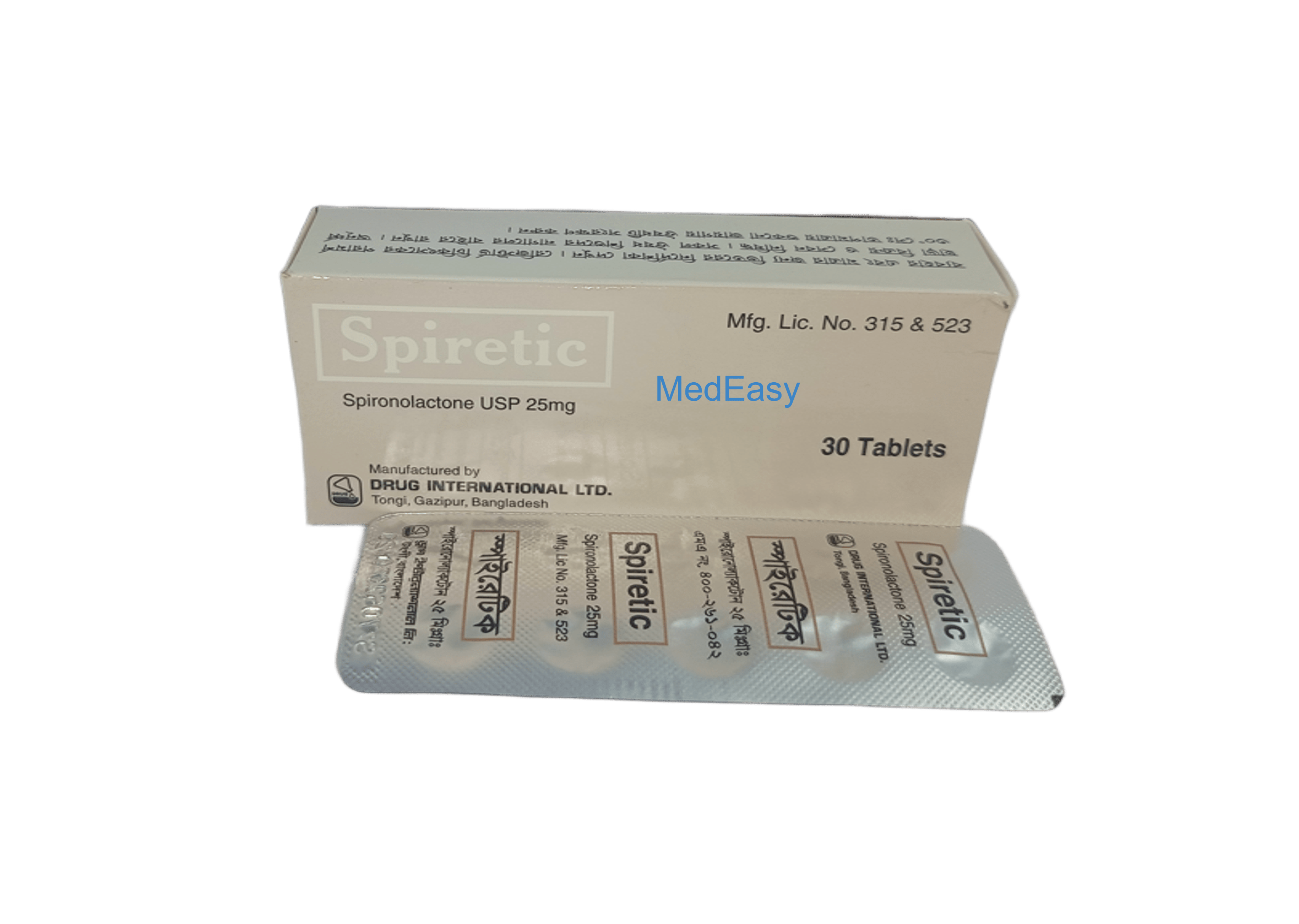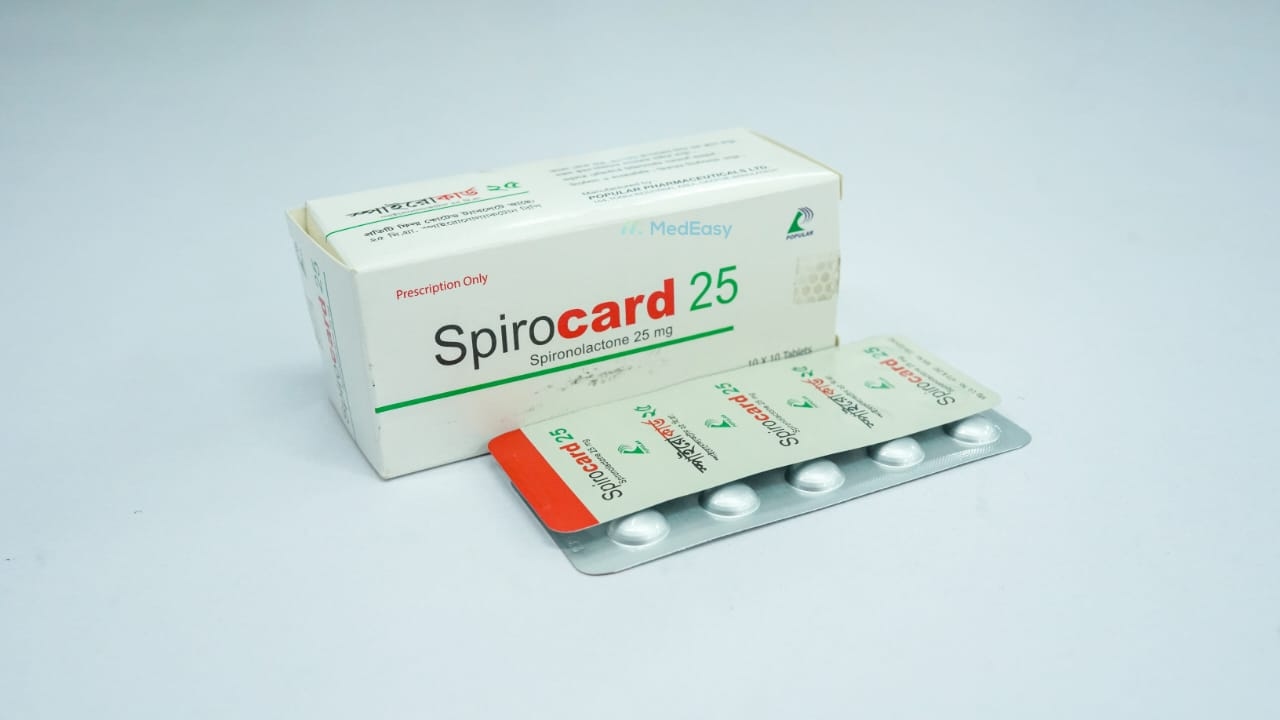
Generic medicine

Spironolactone: Brands, Price & Uses in Bangladesh

Spironolactone is an aldosterone receptor antagonist (potassium-sparing diuretic) used for the following indications and more.

Forms:Tablet

About Spironolactone

Indications of Spironolactone

Spironolactone is an aldosterone receptor antagonist (potassium-sparing diuretic) used for the following indications, classified by strength of evidence:

Established / FDA-approved uses

  • Edema associated with congestive heart failure, hepatic cirrhosis (with or without ascites), and nephrotic syndrome, when other measures are considered inadequate or inappropriate.
  • Essential hypertension, usually as an add-on to other antihypertensive therapy.
  • Primary hyperaldosteronism: for diagnostic testing and for long-term maintenance therapy in patients with discrete aldosterone-producing adrenal adenomas who are poor surgical candidates or awaiting surgery, and in those with bilateral micro- or macronodular adrenal hyperplasia.
  • Hypokalemia, for treatment or prevention when other measures are inadequate.

Guideline-supported / combination-therapy uses

  • As an add-on to standard therapy (ACE inhibitor/ARB and beta-blocker) in patients with NYHA Class III-IV heart failure with reduced ejection fraction, to reduce morbidity and mortality.
  • Adjunct agent in resistant hypertension not adequately controlled on standard combination antihypertensive therapy.

Off-label uses

  • Hirsutism and hormonal acne in women, based on its antiandrogenic activity (widely used off-label; not an FDA-approved indication).
  • Selected patients with heart failure with preserved ejection fraction (HFpEF).

Dosage & Administration of Spironolactone

Dosage of Spironolactone should be individualized and adjusted according to indication, clinical response, and monitoring of serum potassium and renal function.

IndicationTypical Adult DoseNotes
Edema (heart failure, cirrhosis, nephrotic syndrome)25-200 mg/day, single or divided doses; often started at 100 mg/day for about 5 days, then titratedDoses above 50 mg/day may be divided to reduce gastrointestinal upset
Essential hypertension25-100 mg/day, single or divided doses; may be adjusted after 2 weeks based on responseUsually combined with other antihypertensive agents
Primary hyperaldosteronismDiagnostic testing: 400 mg/day for 4 days (short test) or 3-4 weeks (long test); Maintenance: lowest effective dose, individualizedSpecialist (endocrinology)-directed therapy
Hypokalemia25-100 mg/dayUsed when other potassium-conserving measures are inadequate
Heart failure, NYHA Class III-IV with reduced ejection fractionStart 12.5-25 mg once daily; may increase to 25-50 mg once daily based on response and potassium/renal monitoringGiven in addition to standard heart failure therapy

Pediatric dose (edema): approximately 1-3.3 mg/kg/day given in divided doses, individualized and adjusted based on response and tolerability; safety and efficacy for indications other than edema have not been well established in children (see Use in Special Populations and Pediatric Uses).

Dose adjustment in renal or hepatic impairment is required (see Precautions and Warnings and Use in Special Populations).

Side Effects of Spironolactone

Common

  • Gynecomastia (dose- and duration-related; usually reversible on stopping Spironolactone)
  • Menstrual irregularities, breast tenderness in women
  • Hyperkalemia (mild, dose-related)
  • Gastrointestinal upset: nausea, vomiting, diarrhea, abdominal cramping
  • Headache, dizziness, drowsiness, fatigue
  • Decreased libido and erectile dysfunction in men

Less common / serious

  • Severe hyperkalemia, which can cause cardiac arrhythmia (see Contraindications and Precautions)
  • Hyponatremia and dehydration
  • Elevated liver enzymes; hepatotoxicity (rare)
  • Skin rash; rare severe cutaneous reactions
  • Agranulocytosis (rare)

Contraindications of Spironolactone

  • Known hypersensitivity to Spironolactone or any component of the formulation.
  • Hyperkalemia (elevated serum potassium).
  • Addison's disease (adrenal insufficiency).
  • Anuria or acute renal insufficiency / significant impairment of renal excretory function.
  • Concurrent use with eplerenone.

Frequently Asked Questions about Spironolactone

What is Spironolactone used for?

Spironolactone is used to treat fluid retention (edema) caused by heart failure, liver cirrhosis, or nephrotic syndrome, to treat high blood pressure, and to diagnose and manage primary hyperaldosteronism. It is also used off-label for hormonal acne and excess hair growth (hirsutism) in women.

How should I take Spironolactone?

Take Spironolactone by mouth exactly as prescribed by your physician, preferably with food to reduce stomach upset. Do not change your dose or stop Spironolactone suddenly without consulting your doctor, especially if you are being treated for heart failure or liver disease.

Can Spironolactone cause high potassium levels?

Yes. Spironolactone is a potassium-sparing diuretic and can cause hyperkalemia (high blood potassium), which can be serious and affect the heart. Your doctor will check your blood potassium and kidney function periodically, and you should avoid potassium supplements and salt substitutes containing potassium unless your doctor tells you otherwise.

Can I take Spironolactone during pregnancy or while breastfeeding?

Spironolactone should be used during pregnancy only if clearly needed, because animal studies suggest a potential risk of antiandrogenic effects on a male fetus; always consult your physician before using Spironolactone if you are pregnant or planning pregnancy. Spironolactone's metabolite passes into breast milk, so discuss the risks and benefits with your doctor before breastfeeding while taking Spironolactone.

What are the common side effects of Spironolactone?

Common side effects of Spironolactone include gynecomastia (breast enlargement/tenderness, mainly in men), menstrual irregularities, gastrointestinal upset, headache, dizziness, and elevated potassium levels. Contact your doctor if you notice irregular heartbeat, severe weakness, or signs of an allergic reaction while taking Spironolactone.

Are there foods or medicines I should avoid while taking Spironolactone?

While taking Spironolactone, avoid potassium supplements, salt substitutes containing potassium, and excessive intake of potassium-rich foods unless advised by your doctor. Tell your doctor about all medicines you take, especially ACE inhibitors, ARBs, NSAIDs, lithium, and eplerenone, since these can interact with Spironolactone.

Disclaimer

The information provided is accurate to the best of our knowledge, but it does not replace professional medical advice. We cannot guarantee its completeness or accuracy, and the absence of specific information about a drug should not be taken as an endorsement. We are not responsible for any consequences arising from this information, so please consult a healthcare professional for any concerns or questions.

DoctorBlogArticles