
8% Off
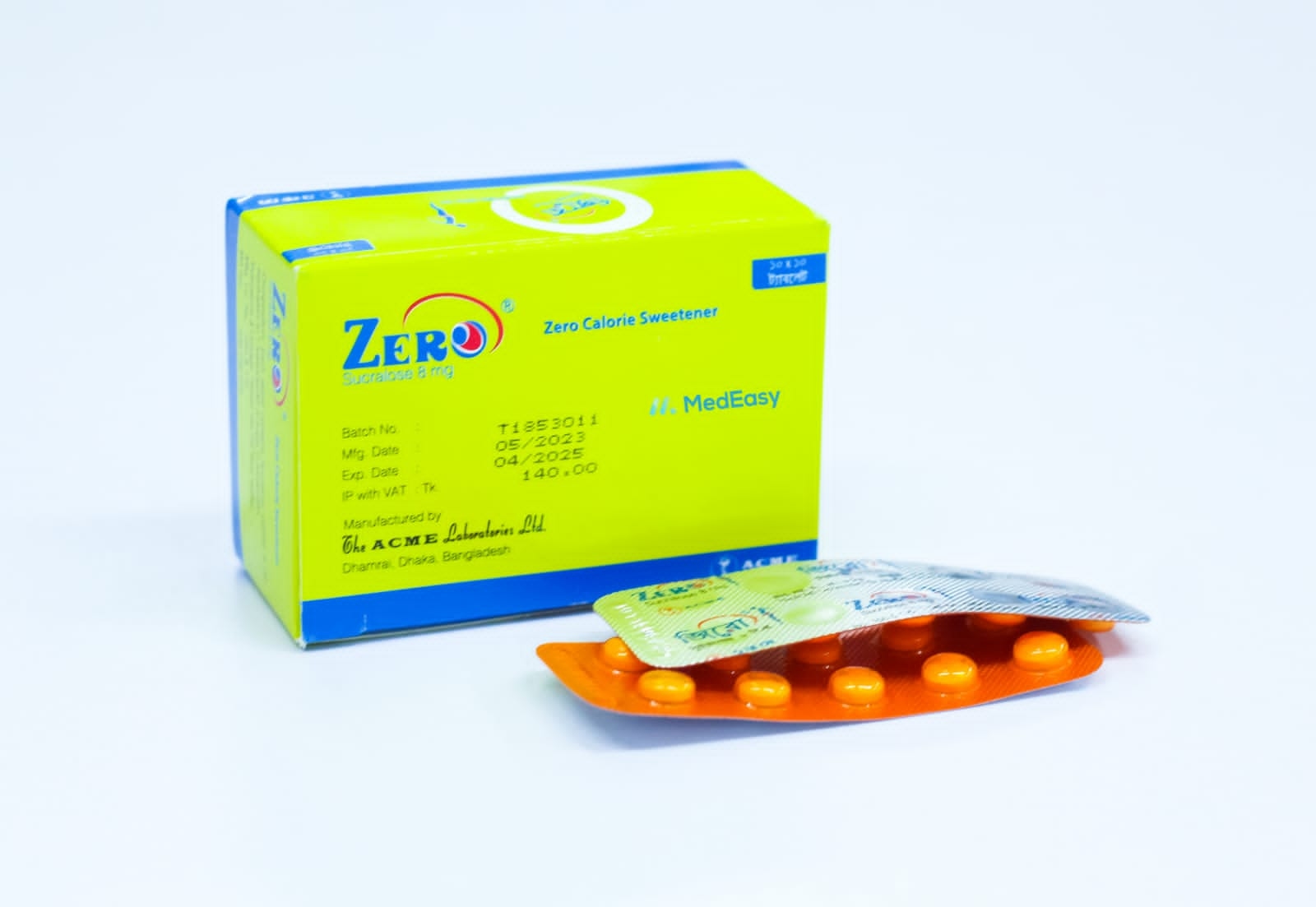
Zero8 mg
ACME Laboratories Ltd.
৳12.88
Add to cart
Sucralose is a non-nutritive (calorie-free) artificial sweetener used as a sugar substitute for sweetening foods and beverages.
Sucralose is a non-nutritive (calorie-free) artificial sweetener used as a sugar substitute for sweetening foods and beverages. It is a food additive/dietary aid rather than a therapeutic drug, and is commonly available through pharmacies for people who wish to reduce sugar or calorie intake.
Important: Sucralose does not treat, cure, or prevent diabetes or any medical condition. It is a dietary aid intended to support, not replace, prescribed diabetes treatment, medical nutrition therapy, and blood glucose monitoring.
Sucralose is intended to be used according to personal taste preference to replace sugar in foods and beverages. There is no prescribed therapeutic "dose" as Sucralose is a food additive rather than a medication; however, an Acceptable Daily Intake (ADI) has been established by regulatory authorities.
| Regulatory Body | Acceptable Daily Intake (ADI) |
|---|---|
| US FDA | 5 mg/kg body weight/day |
| EFSA (Europe) | 15 mg/kg body weight/day |
| JECFA (WHO/FAO) | 15 mg/kg body weight/day |
For an average adult, typical dietary use as a tabletop sweetener or in "diet"/"sugar-free" products remains well within these established ADIs.
Sucralose tablets, sachets, or drops may be added directly to beverages (tea, coffee, water) or used in place of sugar in food preparation and baking, as Sucralose is heat-stable. Follow the specific product label for the sugar-equivalent measurement (e.g., number of tablets or drops per teaspoon of sugar replaced).
Sucralose is generally very well tolerated by the vast majority of users. Reported side effects are uncommon and typically mild:
Some research has explored possible effects of very high, prolonged Sucralose intake on gut microbiota composition; findings remain inconsistent and inconclusive, and this continues to be an area of ongoing scientific research. Major regulatory bodies (FDA, EFSA) have not found this to warrant a change in the established safety status of Sucralose at typical dietary intake levels.
Sucralose is contraindicated only in individuals with a known hypersensitivity to Sucralose or any component of the specific product formulation. True hypersensitivity reactions to Sucralose are rare.
Disclaimer
The information provided is accurate to the best of our knowledge, but it does not replace professional medical advice. We cannot guarantee its completeness or accuracy, and the absence of specific information about a drug should not be taken as an endorsement. We are not responsible for any consequences arising from this information, so please consult a healthcare professional for any concerns or questions.



