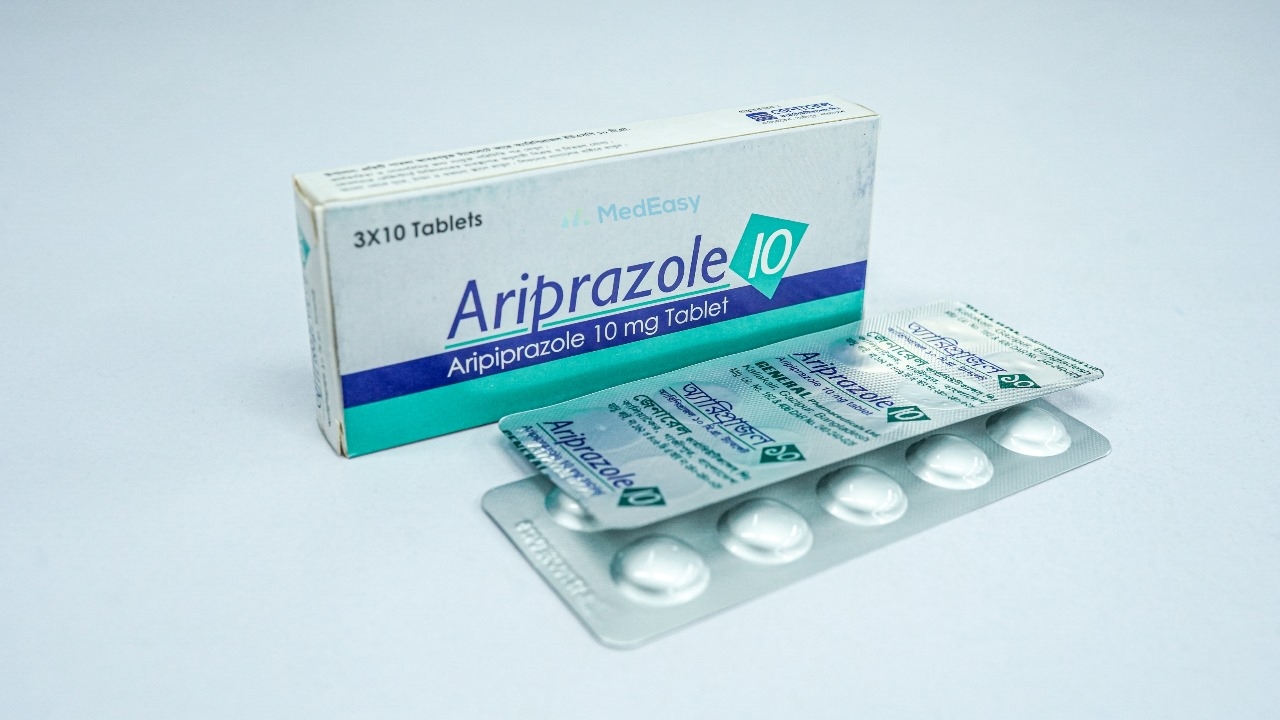
Generic medicine

Aripiprazole: Brands, Price & Uses in Bangladesh

Aripiprazole is an atypical antipsychotic (a dopamine partial agonist) with the following evidence-based indications: Established / FDA-Approved Uses Schizophrenia - in adults and adolescents 13…

Forms:TabletOral Solution

About Aripiprazole

Indications of Aripiprazole

Aripiprazole is an atypical antipsychotic (a dopamine partial agonist) with the following evidence-based indications:

Established / FDA-Approved Uses

  • Schizophrenia - in adults and adolescents 13 years of age and older.
  • Bipolar I disorder - treatment of acute manic and mixed episodes, as monotherapy or as an adjunct to lithium or valproate, in adults and pediatric patients 10 years of age and older; also used for maintenance treatment.
  • Adjunctive treatment of major depressive disorder (MDD) in adults who have had an inadequate response to antidepressant therapy alone - Aripiprazole is added on to an existing antidepressant, not used as monotherapy for this indication.
  • Irritability associated with autistic disorder - in pediatric patients 6 to 17 years of age (symptoms such as aggression, self-injury, and tantrums).
  • Tourette's disorder - tic suppression in pediatric patients 6 to 18 years of age.
  • Agitation associated with schizophrenia or bipolar I mania - short-acting intramuscular injection formulation, for acute agitation in adults.

Important Note

Aripiprazole is not approved for the treatment of dementia-related psychosis in elderly patients; see Precautions and Warnings for the associated mortality risk in this population.

Dosage & Administration of Aripiprazole

Dosing of Aripiprazole is individualized by indication and titrated based on clinical response and tolerability. It may be taken with or without food.

IndicationAdult DosePediatric Dose
SchizophreniaInitial 10-15 mg once daily; target 10-15 mg/day; maximum 30 mg/dayAges 13-17: start 2 mg/day, titrate to 10 mg/day over about 2 weeks; max 30 mg/day
Bipolar I disorder (acute manic/mixed episode)Monotherapy: start 15 mg once daily; Adjunct to lithium/valproate: 10-15 mg once daily; max 30 mg/dayAges 10-17: start 2 mg/day, titrate to a target of 10 mg/day; max 30 mg/day
Adjunct to antidepressants for MDDStart 2-5 mg once daily; target range 5-10 mg/day; max 15 mg/dayNot established
Irritability associated with autistic disorderNot an adult indicationAges 6-17: start 2 mg/day, may increase to 5 mg/day after 1 week, then in increments of 5 mg/day; usual target 5-15 mg/day
Tourette's disorder (tic suppression)Not an adult indicationAges 6-18: start 2 mg/day for 2 days, then 5 mg/day; may titrate further; max 10 mg/day if <50 kg, 20 mg/day if ≥50 kg
Acute agitation (schizophrenia/bipolar mania)IM injection 9.75 mg (range 5.25-15 mg); may repeat after 2 hours; max 30 mg/dayNot established

Dose Adjustments

  • With strong CYP2D6 inhibitors or CYP3A4 inhibitors (e.g., fluoxetine, paroxetine, ketoconazole): reduce Aripiprazole dose to about half the usual dose.
  • With both a CYP2D6 and CYP3A4 inhibitor together, or in known CYP2D6 poor metabolizers: reduce dose to about a quarter of the usual dose.
  • With strong CYP3A4 inducers (e.g., carbamazepine, rifampin): the Aripiprazole dose should be doubled over 1-2 weeks; when the inducer is stopped, the Aripiprazole dose should be reduced back.
  • Renal impairment: no dosage adjustment generally required.
  • Hepatic impairment: no dosage adjustment generally required for mild-to-moderate impairment; use with caution in severe impairment.

Always take Aripiprazole exactly as prescribed by your physician; do not change the dose or stop treatment abruptly without medical advice.

Side Effects of Aripiprazole

Side effects of Aripiprazole vary by indication, dose, and patient age. Common and serious effects include:

Common Side Effects

  • Akathisia (a feeling of inner restlessness and an inability to sit still) - notably more frequent with Aripiprazole than with many other antipsychotics.
  • Headache, insomnia or somnolence/sedation, nausea, vomiting, constipation.
  • Anxiety, restlessness, tremor, dizziness, blurred vision.
  • Weight gain (generally less pronounced than with some other atypical antipsychotics, but still clinically relevant).

Serious Side Effects (seek prompt medical attention)

  • Metabolic changes: hyperglycemia, new-onset or worsening diabetes, and dyslipidemia (elevated cholesterol/triglycerides); periodic monitoring of blood glucose, weight, and lipids is recommended.
  • Extrapyramidal symptoms (EPS): muscle stiffness, tremor, abnormal movements.
  • Tardive dyskinesia: a potentially irreversible movement disorder that can develop with long-term use; risk increases with duration of treatment.
  • Impulse control problems: compulsive or uncontrollable urges to gamble, eat, shop, or engage in sexual behavior have been reported and typically resolve after dose reduction or discontinuation.
  • Neuroleptic malignant syndrome (NMS): a rare but life-threatening reaction presenting with high fever, muscle rigidity, altered mental status, and autonomic instability; requires immediate discontinuation and emergency treatment.
  • Orthostatic hypotension, syncope, and, rarely, seizures and low white blood cell counts (leukopenia/neutropenia).
  • Suicidal thoughts and behavior - see Precautions and Warnings.

Contraindications of Aripiprazole

Aripiprazole is contraindicated in patients with a known hypersensitivity to Aripiprazole or to any component of the formulation. Serious hypersensitivity reactions, including anaphylaxis and angioedema, have been reported.

Frequently Asked Questions about Aripiprazole

What is Aripiprazole used for?

Aripiprazole is an atypical antipsychotic medicine used to treat schizophrenia, bipolar I disorder (manic and mixed episodes), and as an add-on treatment for major depressive disorder that has not fully responded to standard antidepressants. In children, it is also used for irritability associated with autistic disorder and for tic suppression in Tourette's disorder.

How long does it take for Aripiprazole to start working?

Some improvement in agitation or sleep may be noticed within the first 1-2 weeks, but the full antipsychotic or mood-stabilizing effect of Aripiprazole can take several weeks of regular use. Do not stop taking Aripiprazole early just because you do not feel a full effect immediately - discuss any concerns with your physician.

Can Aripiprazole be taken during pregnancy or breastfeeding?

Aripiprazole should be used during pregnancy only if the potential benefit clearly justifies the potential risk to the fetus, since babies exposed in the third trimester can develop temporary movement or withdrawal symptoms after birth. Aripiprazole also passes into breast milk, so breastfeeding is generally not recommended during treatment unless your physician determines the benefits outweigh the risks. Always consult your physician before starting, stopping, or continuing Aripiprazole during pregnancy or breastfeeding.

What are the most common side effects of Aripiprazole?

The most common side effects of Aripiprazole include akathisia (restlessness and an inability to sit still), headache, nausea, insomnia or drowsiness, constipation, and some weight gain. Most side effects are manageable, but you should report severe restlessness, uncontrollable movements, high fever with muscle stiffness, or new compulsive urges (such as gambling or overeating) to your physician right away.

Who should not take Aripiprazole?

Aripiprazole should not be used by anyone with a known hypersensitivity (allergic reaction) to Aripiprazole. It also carries a boxed warning against use for dementia-related psychosis in elderly patients due to an increased risk of death, and it is not approved for that use. Always share your full medical history with your physician before starting Aripiprazole.

What should I do if I miss a dose or take too much Aripiprazole?

If you miss a dose of Aripiprazole, take it as soon as you remember unless it is almost time for your next dose - do not double up. If you or someone else has taken more Aripiprazole than prescribed, seek immediate medical attention or contact emergency services/poison control right away, as overdose can cause serious drowsiness, rapid heartbeat, or other complications requiring hospital care.

Disclaimer

The information provided is accurate to the best of our knowledge, but it does not replace professional medical advice. We cannot guarantee its completeness or accuracy, and the absence of specific information about a drug should not be taken as an endorsement. We are not responsible for any consequences arising from this information, so please consult a healthcare professional for any concerns or questions.

DoctorBlogArticles